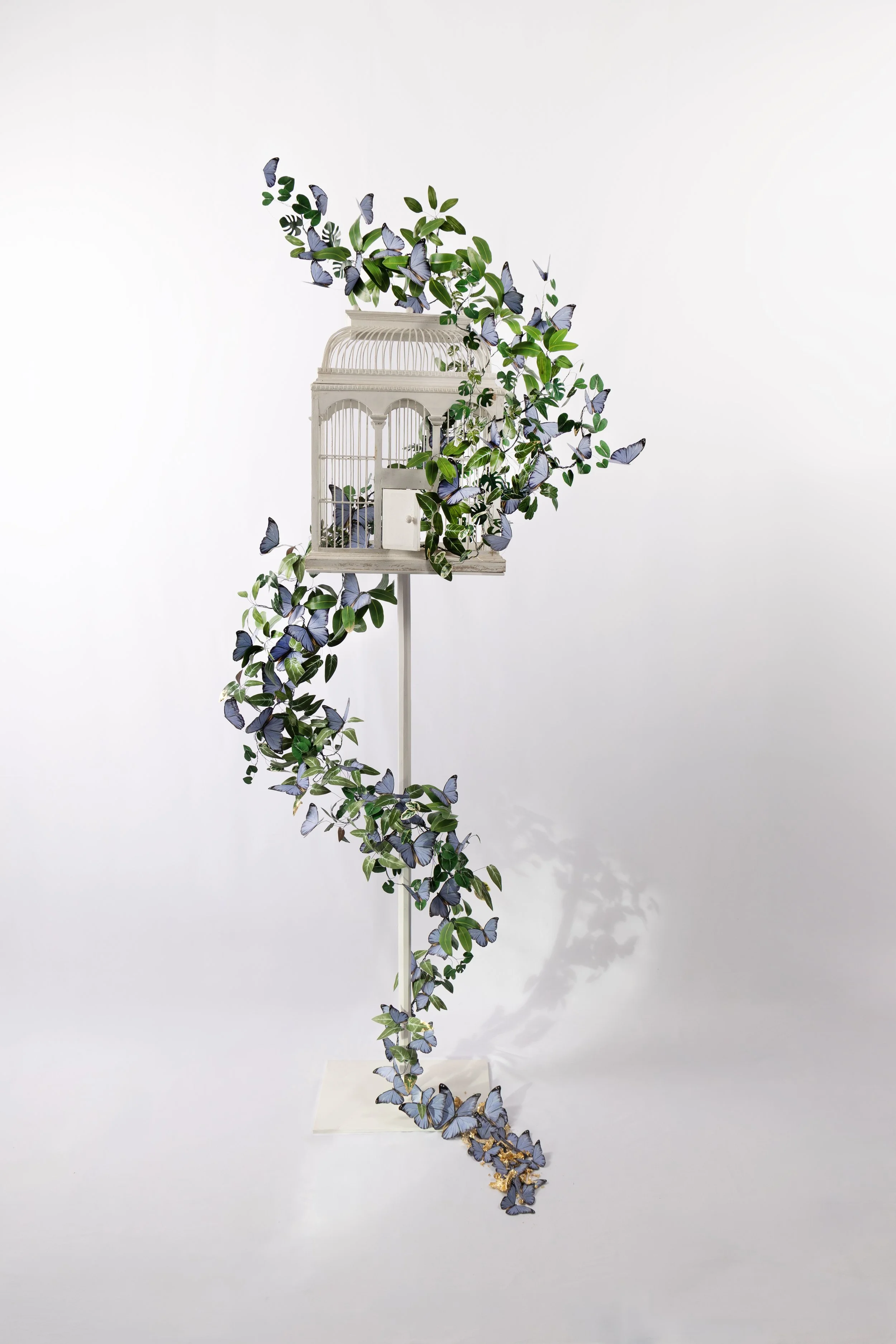
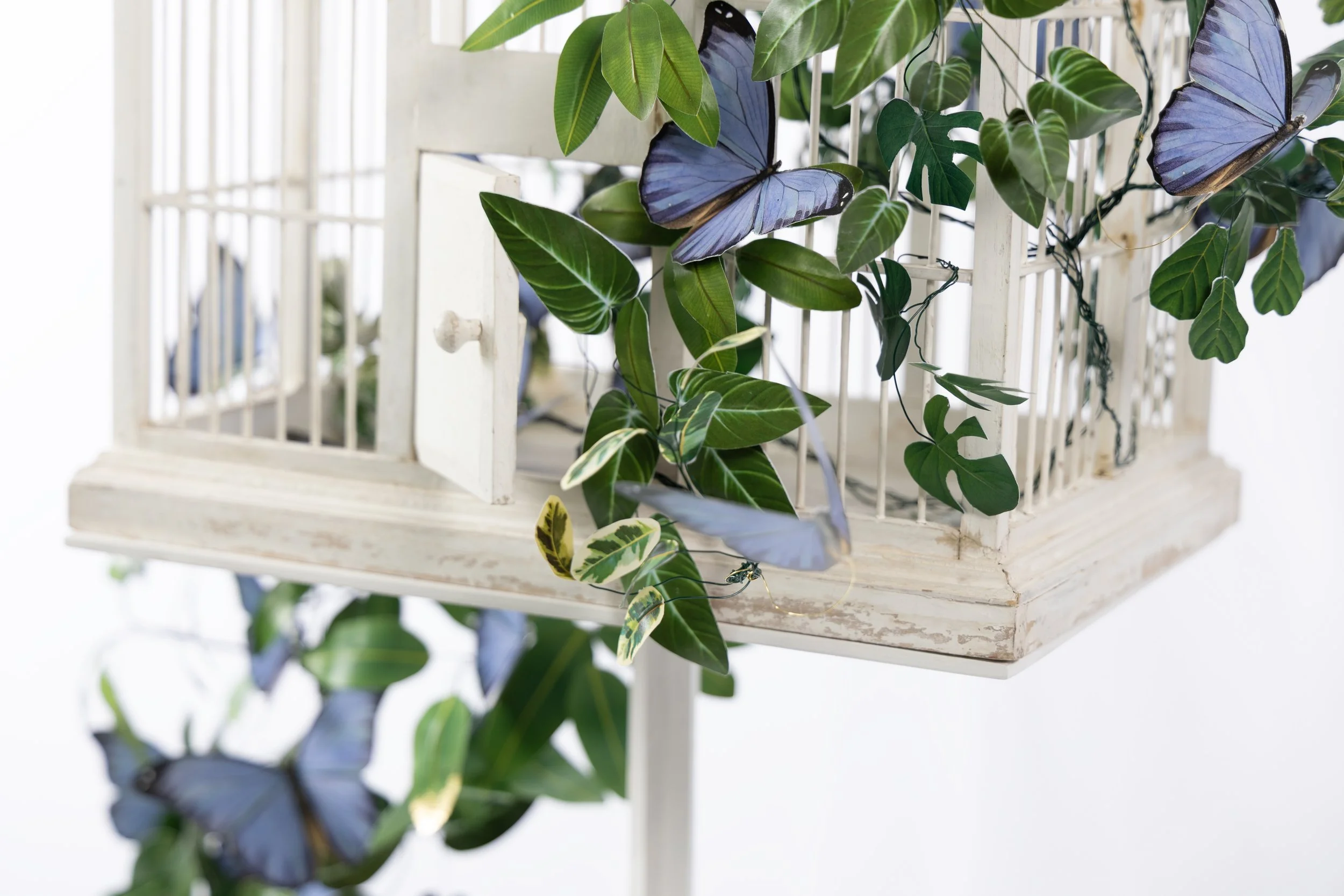
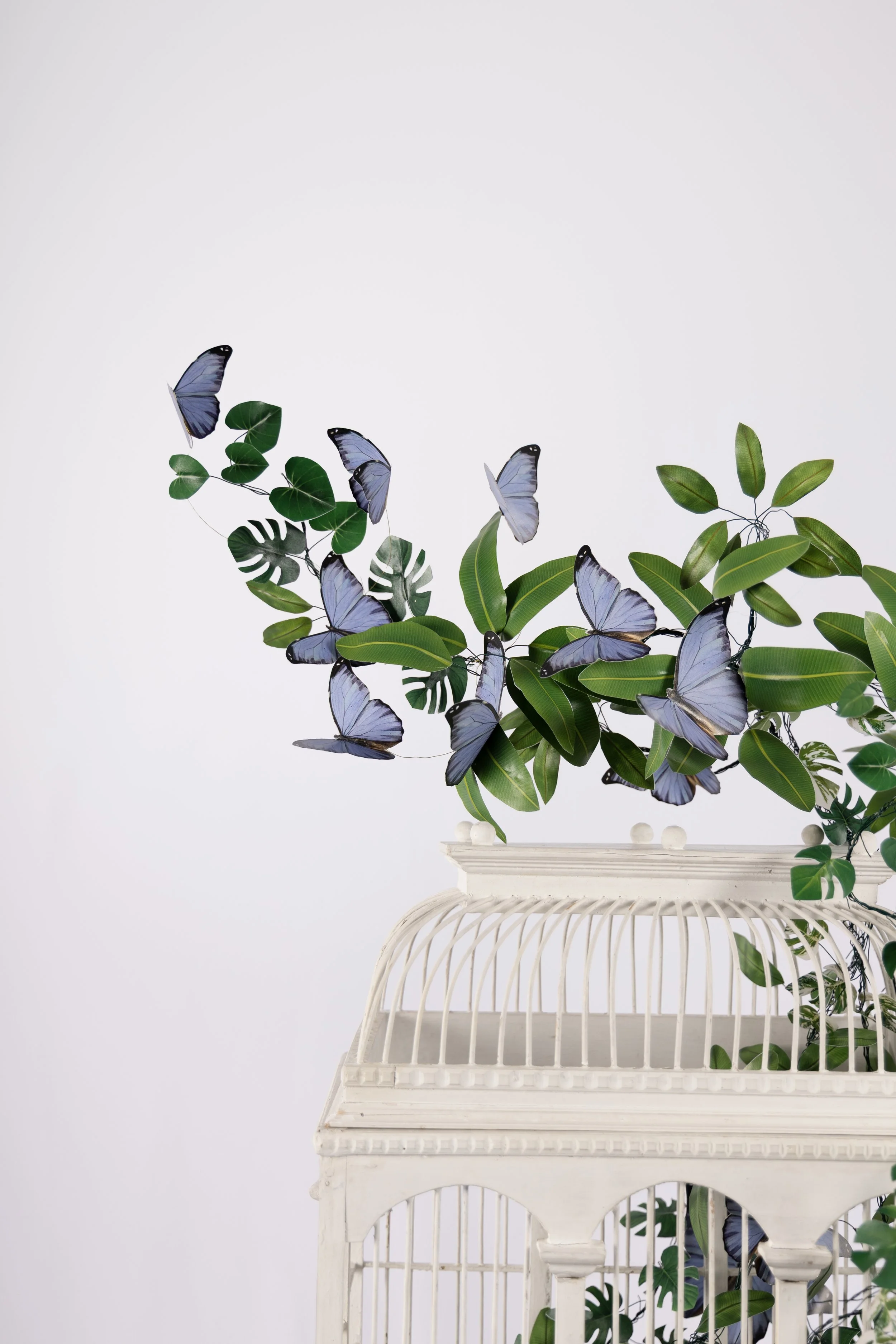
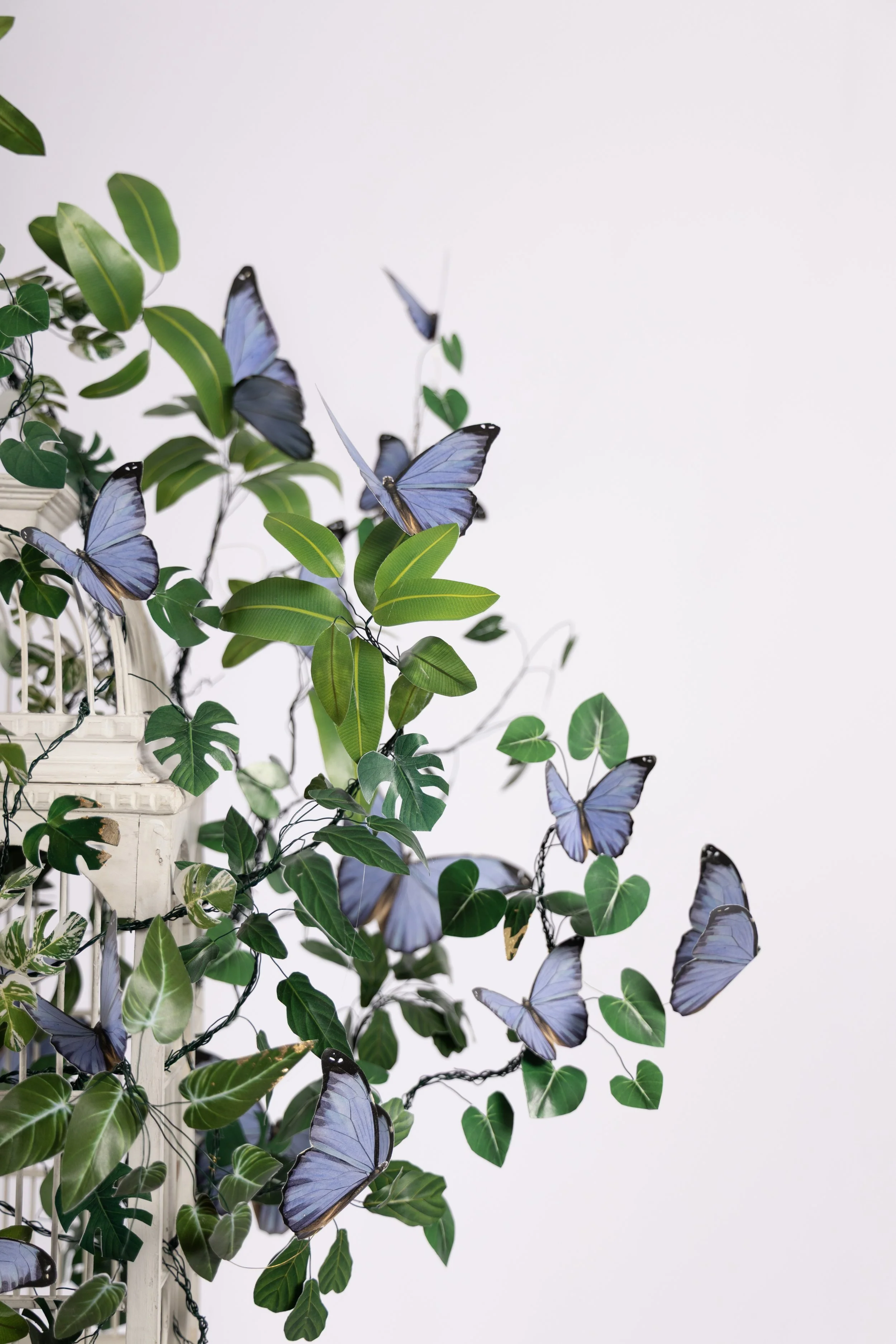
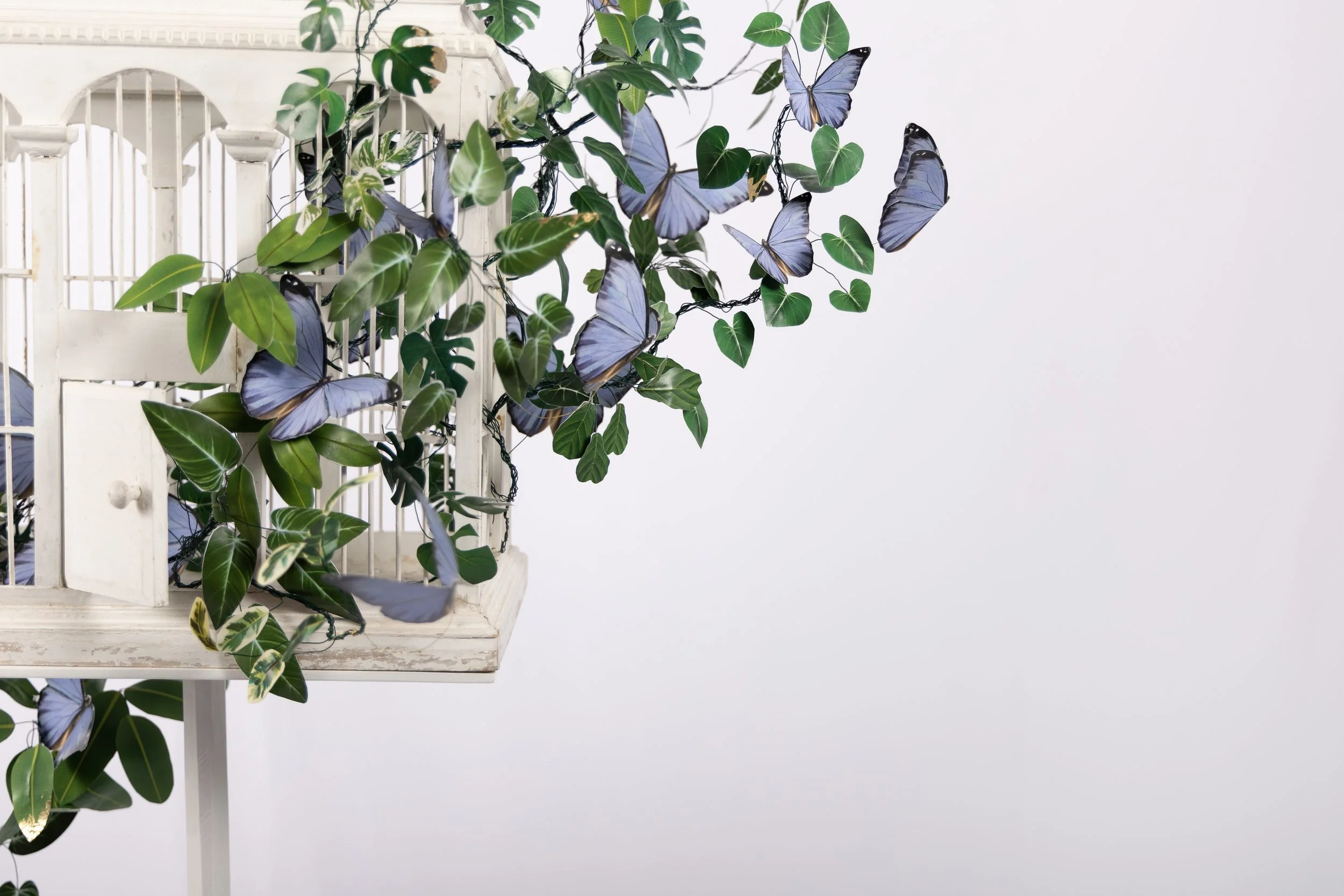
Gilded, 2026
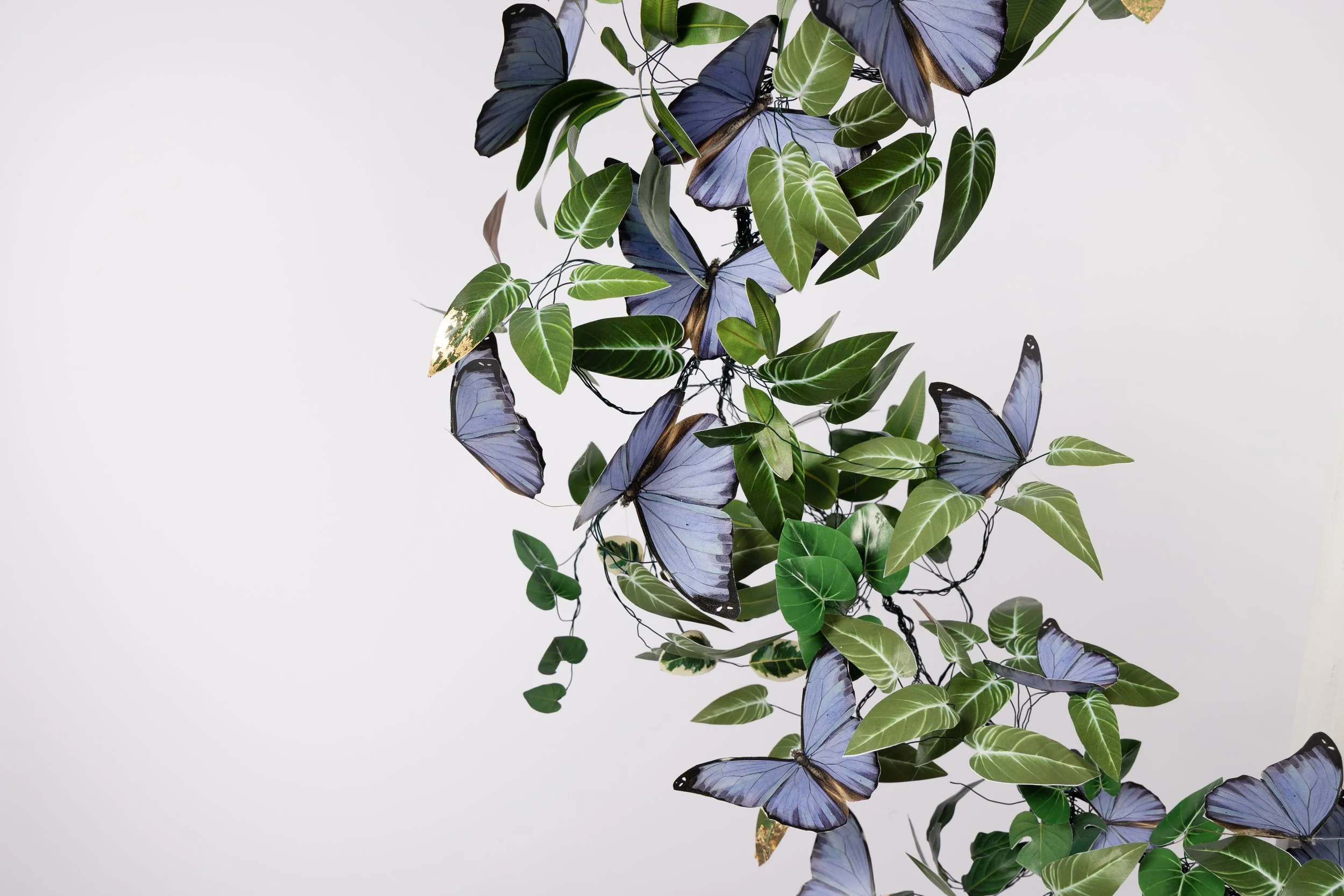
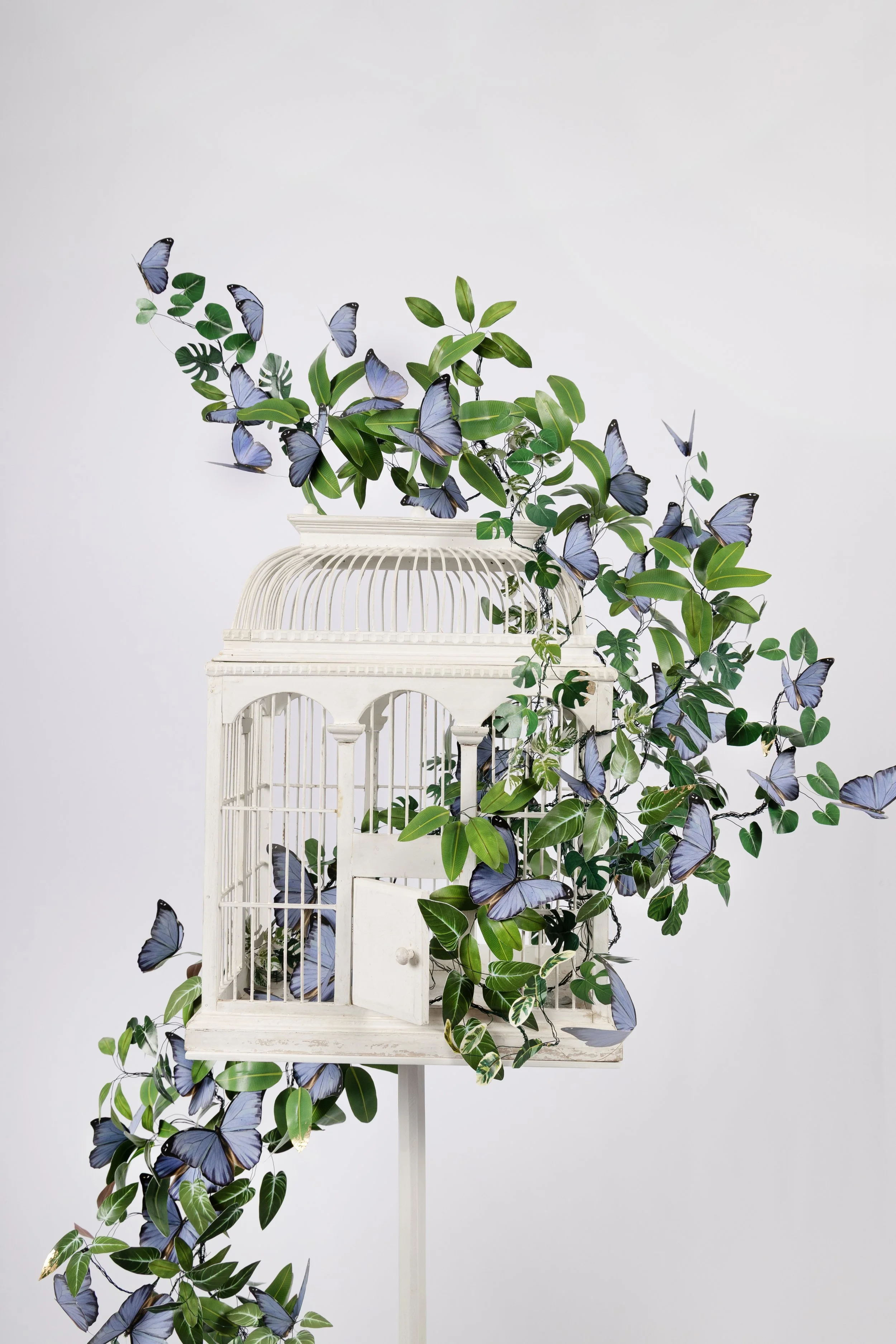
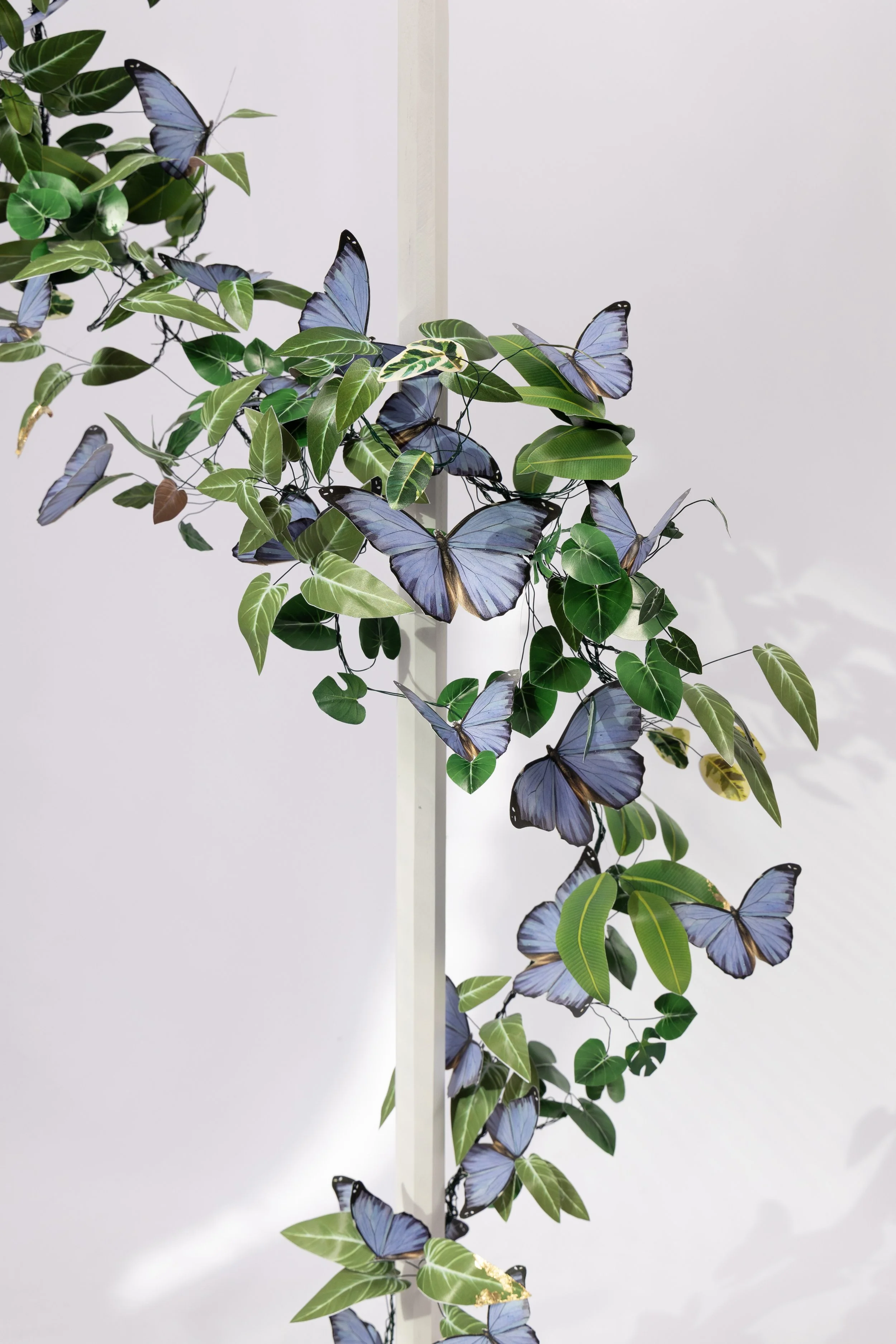
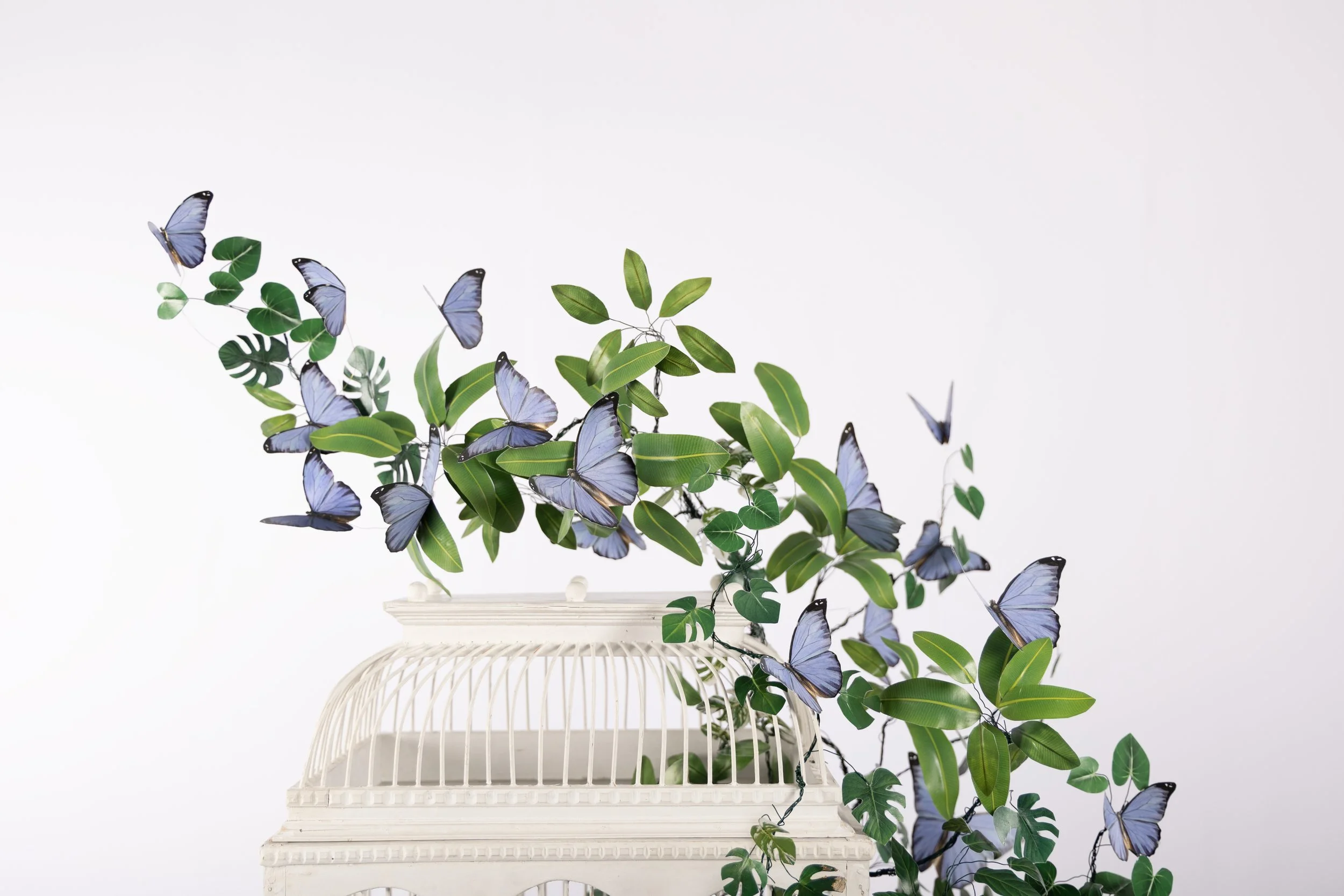
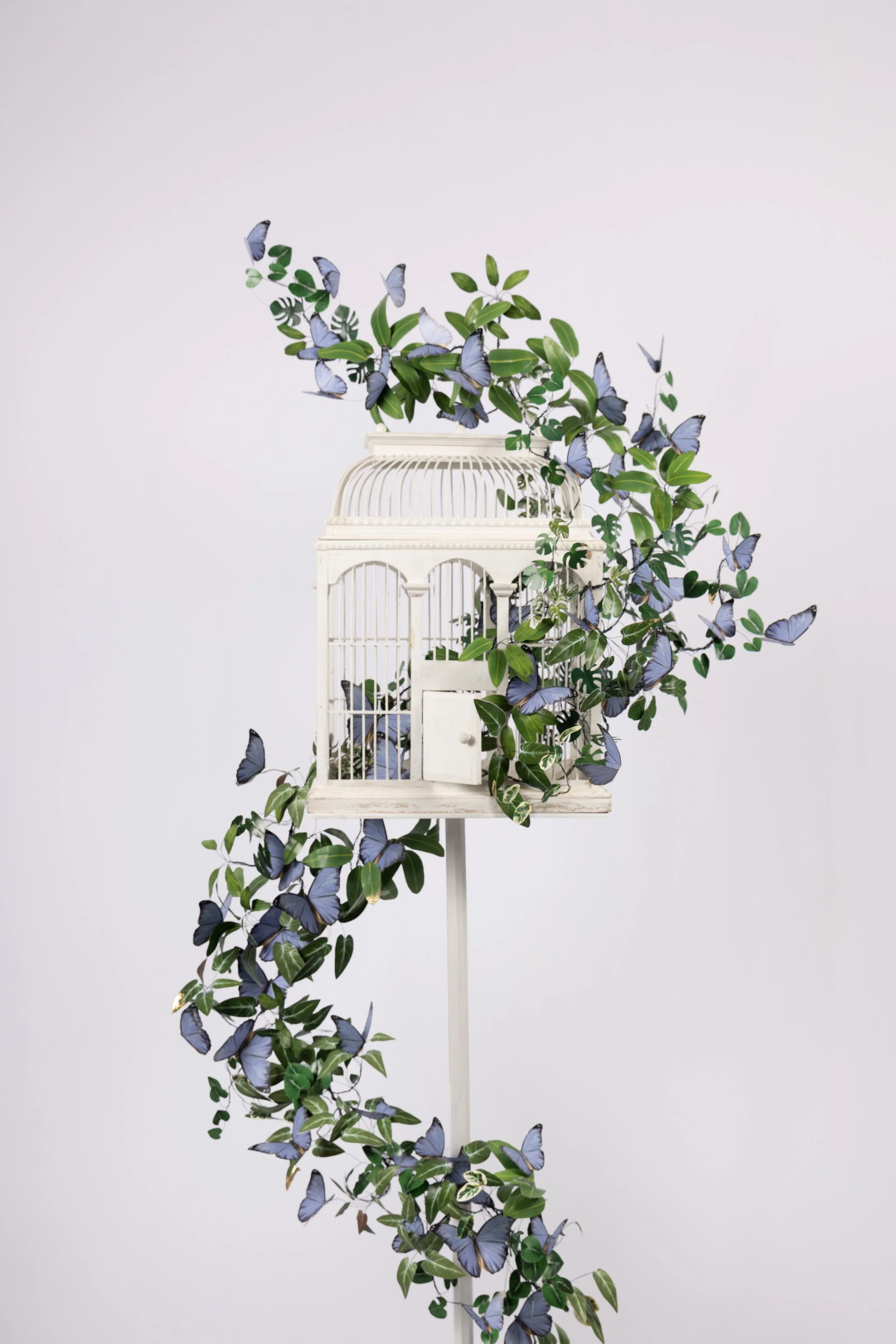
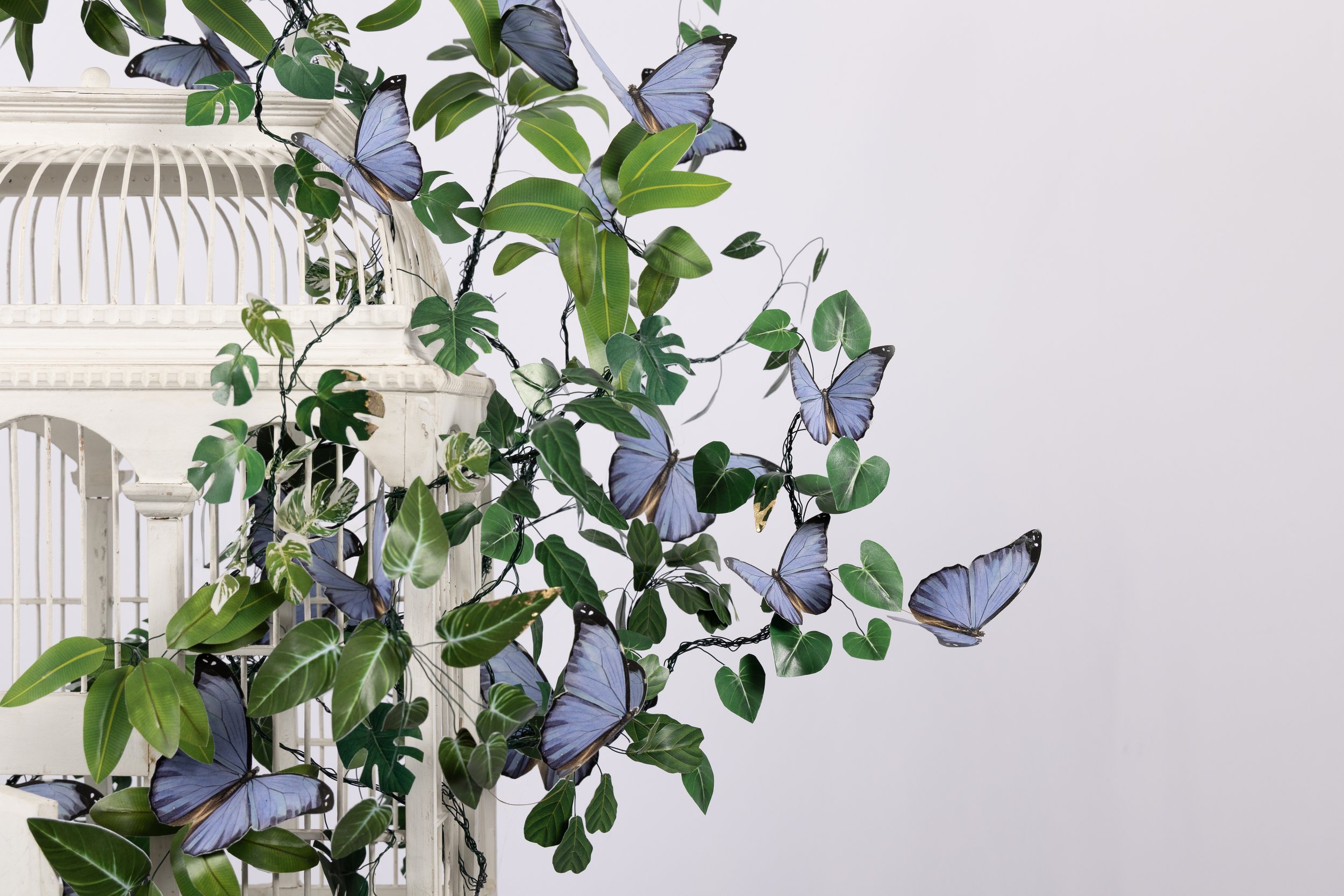
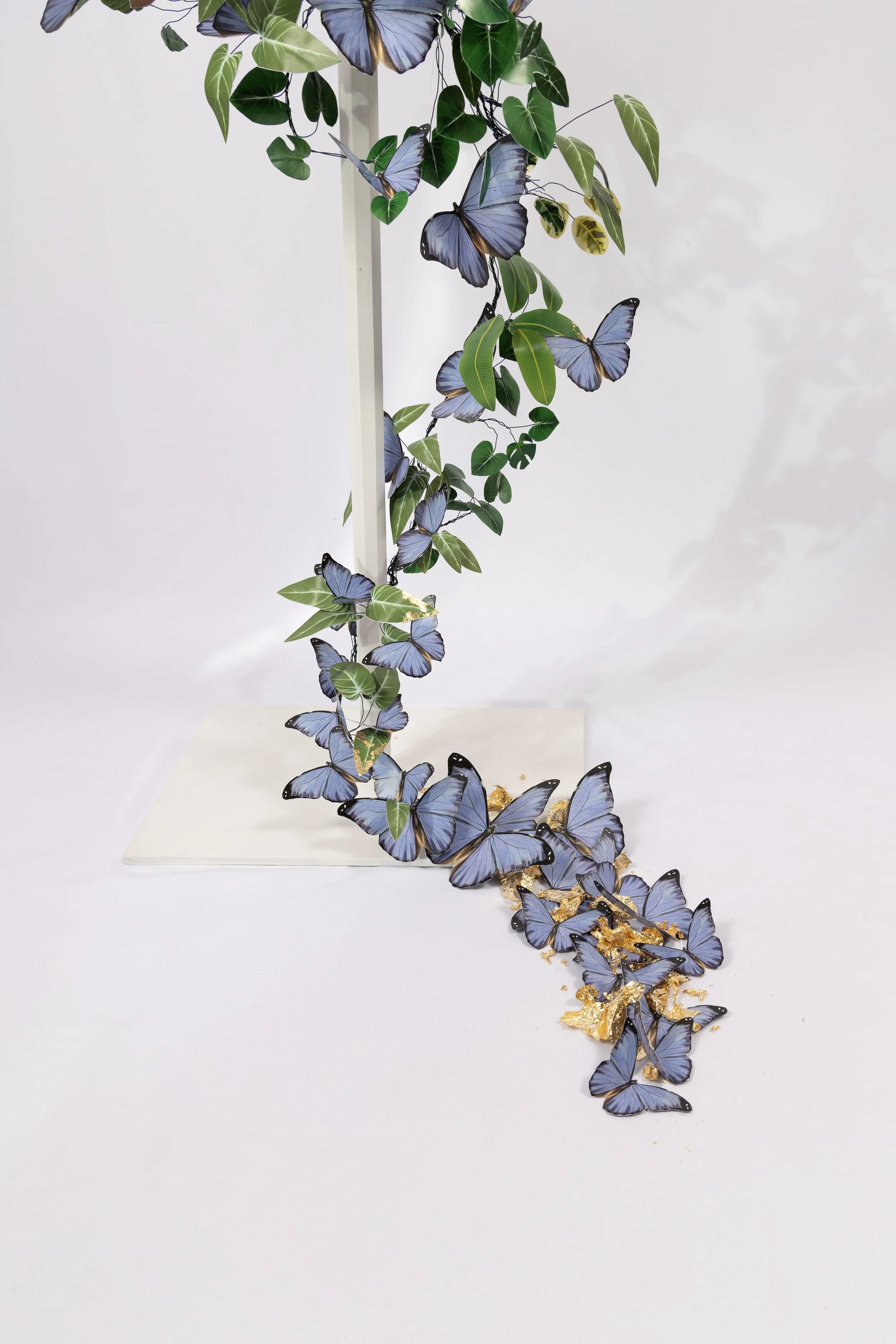
Clare Celeste Börsch works with colonial-era natural history plates to explore the tension between the preciousness of the natural world and our tendency to exploit it. Here, a vintage birdcage stands in for the colonial glasshouse, and for the roots of Western natural history in conquest and extraction. Around it, blue Morpho butterflies and leaves climb and entwine. The Morpho is native to Brazil, where Börsch grew up, and research now shows that deforestation and the loss of biodiversity are dulling its famous blue. Gilded in places, the work evokes how living abundance was captured, contained and transformed into wealth. It asks us to question our extractive relationship to nature, and the violence it took to bring the ecosystems of the Global South into botanical gardens in Europe.
Hand-cut paper, florist’s wire, imitation gold leaf, vintage birdcage on wooden stand.
90 x 50 x 205 cm
The butterflies are printed from Hippolyte Lucas’s Histoire naturelle des lépidoptères exotiques (Paris: Pauquet, 1835–36) and Henley Grose-Smith and William F. Kirby’s Rhopalocera Exotica (London: Gurney & Jackson, 1887–1902), sourced from the Biodiversity Heritage Library. Each butterfly and leaf is cut by hand and assembled on florist’s wire.