Research & Engagement
Before we can protect the living world, we must first hold it vividly in our mind.
Every installation by Clare Celeste Börsch begins in two places at once: in the archive, among natural history plates made more than a century ago, and outdoors, with the people who know a landscape best. Botanists, conservationists and local communities help her choose which species to bring back into view, and the finished works become places where those conversations continue in public.
She calls this art as ecological counter-memory: immersive worlds that remember what is disappearing, celebrate what is still here, and invite people to imagine what might yet survive.
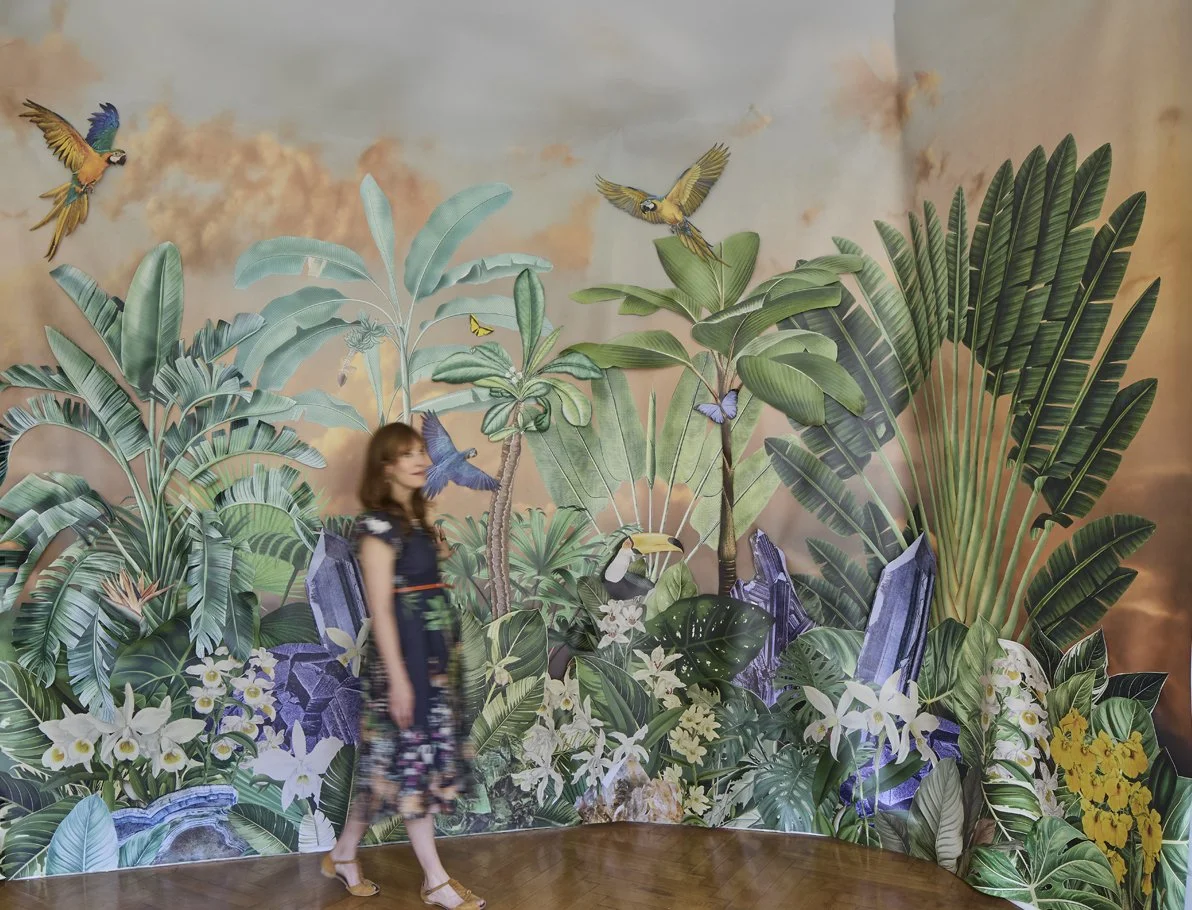
How the work begins
1. Listen to the place
Each project starts with the people who protect a landscape: conservationists, botanists, museum scientists and local communities. They know which species are thriving, which are slipping away, and which nobody notices.
2. Build a species list
Together we choose the plants, insects, birds and animals that tell that place's story: endemic and endangered species, but also the overlooked ones, and the relationships between them. An otter and the fish it hunts. A carpenter bee and the sage it pollinates.
3. Search the archive
Clare finds each species in historic natural history plates, most published before 1900 and many through the Biodiversity Heritage Library. These images are some of the most vivid records we have of a world that is changing. They also carry the history of colonial collecting, and her newer work looks at that history directly.
4. Make it public
The species come back to life at architectural scale, and the installation becomes a meeting place: for excursions, talks, workshops and conversations about what we want to keep.

Research in practice
Restorying: Waters of Demir Kapija (Skopje 2028 European Capital of Culture)
With the conservation organisation Eko-svest and the Natural History Museum of North Macedonia, Clare is portraying around 50 endemic and endangered species of Demir Kapija, the country's newest protected area and the first to protect the Vardar River itself. Excursions, herbarium-making days and public conversations shape the work before it is unveiled in 2028, when it will remain at the museum.
Cheekwood Estate & Gardens, Nashville (2027)
As the 2027 Martin Shallenberger Artist-in-Residence, Clare will develop a three-room immersive installation with the garden's botanists, from mid-July to early August 2027.
Viriditas (Kunsttage Winningen, 2026)
For the ninth Kunsttage Winningen, Clare filled the nave of the village's Protestant church on the Mosel with more than 2,000 naturalist illustrations of endangered and overlooked species. At its heart is the Apollo butterfly, Parnassius apollo vinningensis, a subspecies found only in the steep Moselle vineyards, whose habitat is changing with the climate.
The work takes its name from Hildegard von Bingen, who lived not far from Winningen and wrote of viriditas, the force that makes things alive, and its opposite, ariditas, the withdrawal of life. Clare wrote a text on these ideas for the church's Sunday service, dedicated to the Preservation of Creation.
The installation became a meeting place even while it was being built. A local creative writing group answered it with poems, children from the village daycare came to find the grasses, birds, a mouse and a fox hidden in it and talk about why nature is precious, and Clare spoke with visitors throughout the festival. A Jacquard-woven tapestry from the work now hangs in the church as its antependium, a gift to the congregation.
“Clare Celeste has the ability to perceive nature and the living beings of this earth in all their beauty.” — a Winningen environmental activist
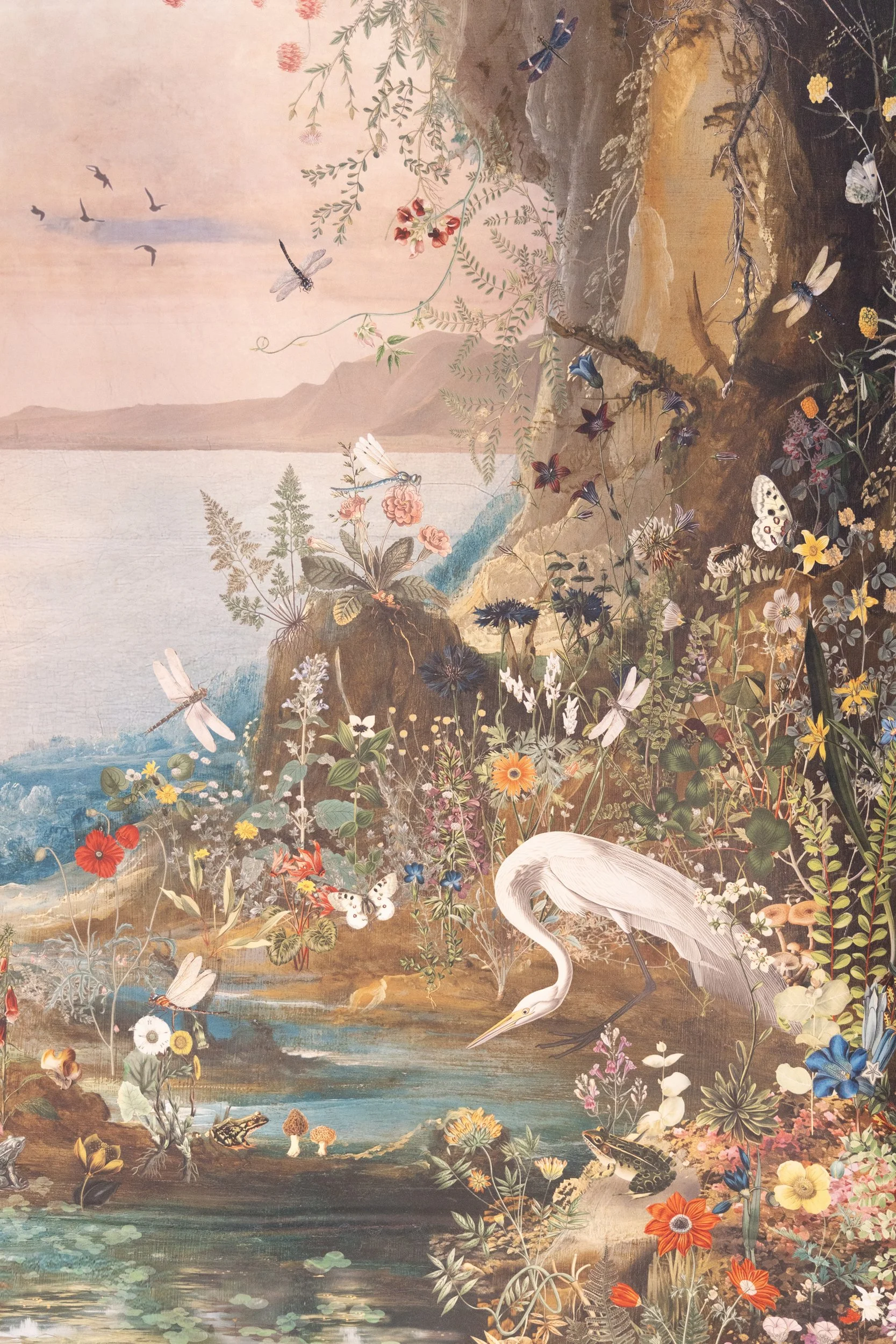
Gilded, Swarm and Enmesh (2026)
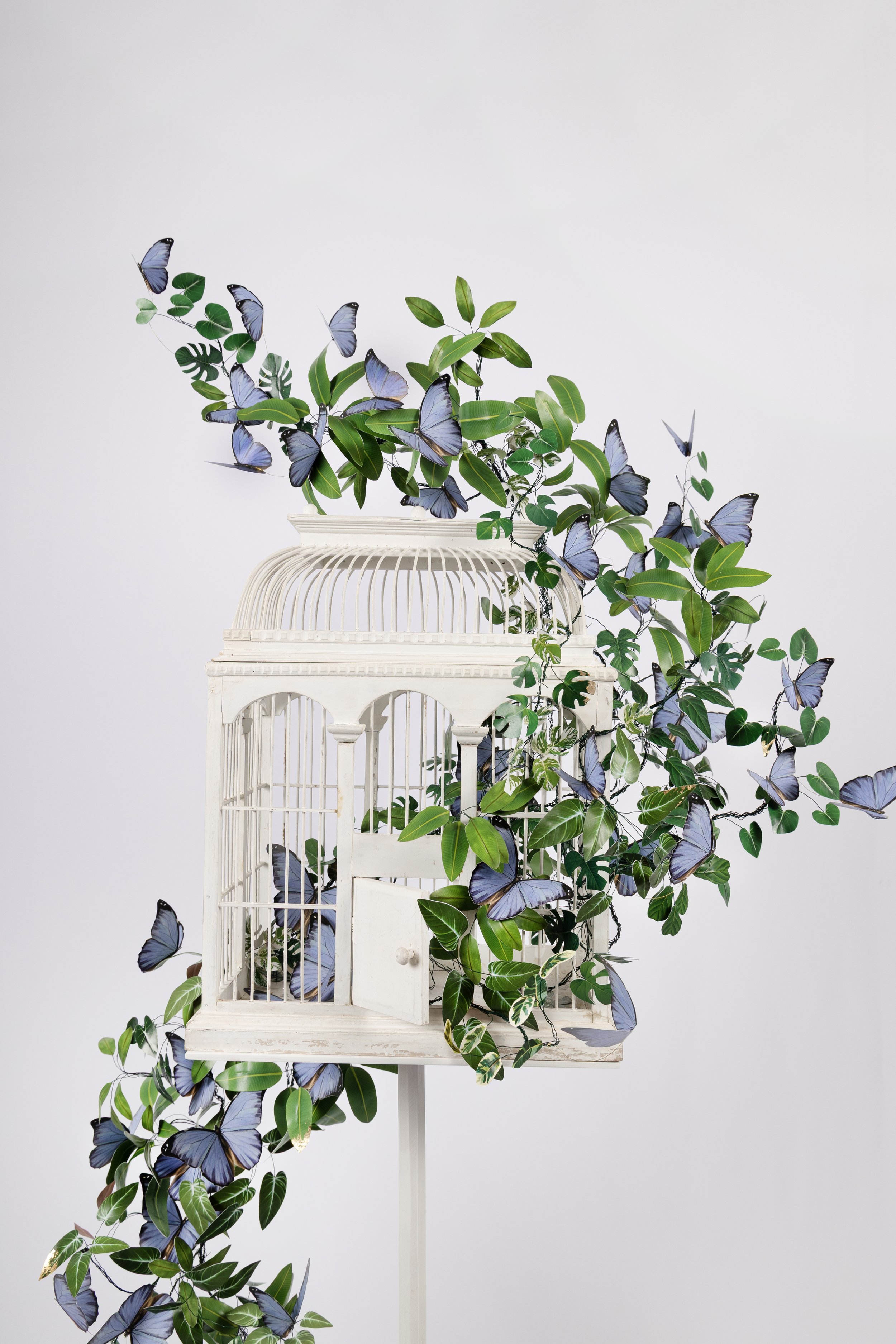
Three works that began with a study by Brazilian and British scientists: in deforested parts of the Amazon, the blue of butterfly communities is fading as species like the Morpho give way to grey and brown. For Clare, who grew up in Brazil, the electric blue of the Morpho is one of her earliest memories.
Engagement
The installations are made to be gathered in. Formats Clare brings to museums, gardens and festivals:
Excursions into the landscape with the scientists who study it.
Herbarium of Attention: day-long walks where participants collect, press and draw their own herbarium.
Parliament of Nature: roundtables where people speak for a river, a forest or a species, inspired by Johannes Vogel's vision of the museum as a public forum.
Futures evenings: imagination workshops on how a place and its species might live through climate change, drawing on Clare's UNESCO Futures Literacy training.
Talks and workshops inside the installation itself.
The Glasshouse Sessions
Conversations on art, natural history and imagining new futures
A quarterly reading circle, one book per session, often with its author or a guest scholar, for artists, scientists and anyone who wants to look past despair towards what we can still do. The first session, in January 2027, will discuss Ursula K. Heise's Imagining Extinction. Join the newsletter to hear about the next session.
Upcoming series
New work: looking back and looking forward
Clare's next body of work faces two ways at once. Looking back, it traces where each natural history plate came from: the expeditions, collectors and colonial glasshouses that gathered the living world into European collections. Looking forward, it asks how the same species might adapt or survive in a changing climate, using the methods of futures thinking.
The series will grow into an interactive installation that hosts its own programme of lectures and conversations with historians, scientists and the public. Clare welcomes conversations with researchers and institutions working on the history of natural history, colonial collections and futures studies.
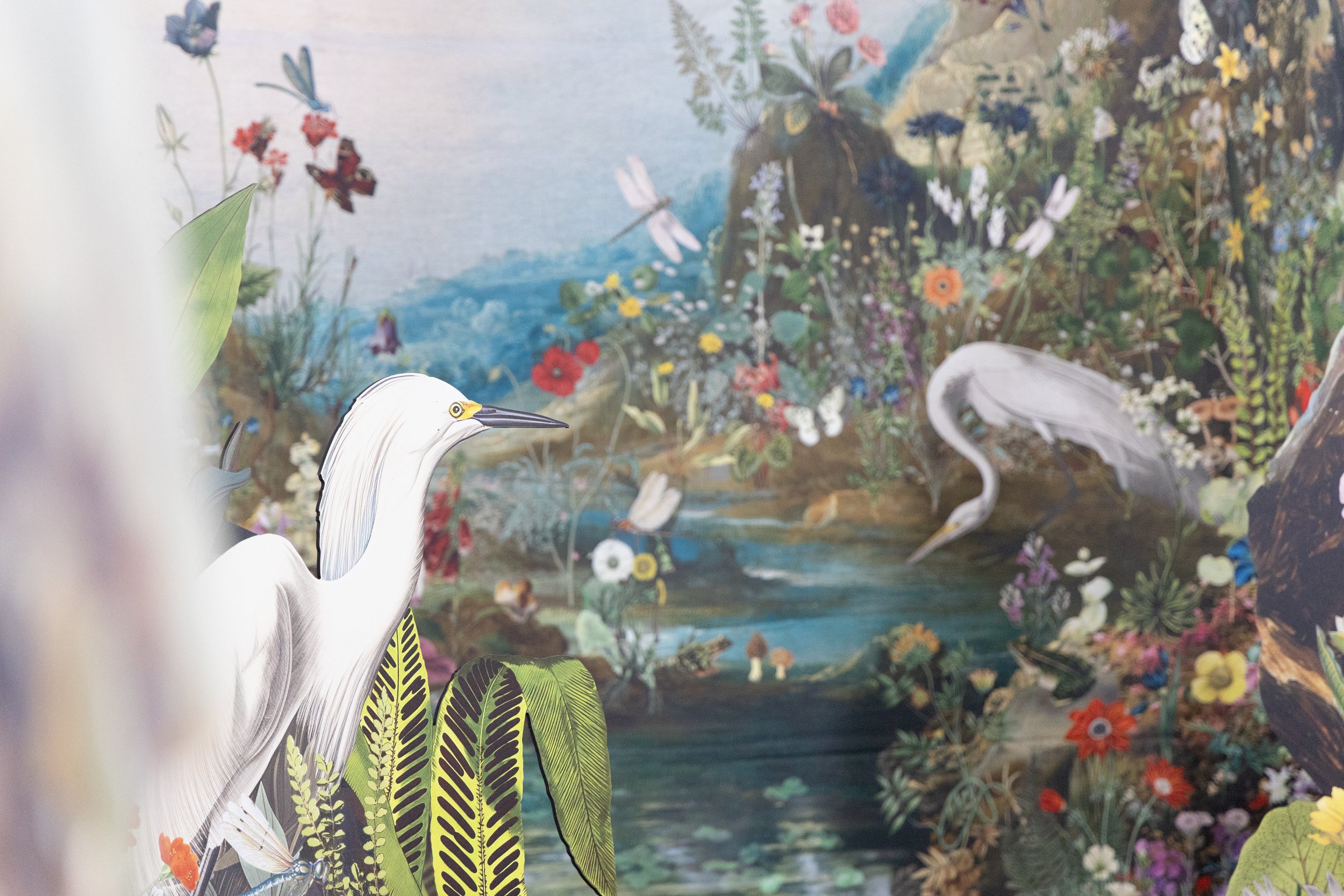
The reading list
In 2026 Clare began a multi-year inquiry into nature and culture: how people have understood the living world, what the archives of natural history remember and what they leave out, and why the living world still moves us. This is its syllabus. It is also the spine of the Glasshouse Sessions, where one book from the list is opened up in conversation each season, ideally with its author or a guest scholar.
What we mean by "nature"
Etienne Benson, Surroundings: A History of Environments and Environmentalisms
William Cronon, "The Trouble with Wilderness"
Charles C. Mann, 1491, on landscapes shaped for millennia by Indigenous burning and cultivation
Neil MacGregor, Germany: Memories of a Nation, especially the forest, from ancient reverence to Waldsterben
The archive and its making
Daniela Bleichmar, Visible Empire
Londa Schiebinger, Plants and Empire
Donna Haraway, "Teddy Bear Patriarchy"
Colonial Objects of Natural History (Museum für Naturkunde Berlin, 2025)
Making from a damaged archive
Saidiya Hartman, "Venus in Two Acts"
Walter Benjamin, "Theses on the Philosophy of History"
Anna Tsing, The Mushroom at the End of the World
Extinction, memory and the shifting baseline
Daniel Pauly, "Anecdotes and the shifting baseline syndrome of fisheries"
Ursula K. Heise, Imagining Extinction
Thom van Dooren, Flight Ways
Dolly Jørgensen, Recovering Lost Species in the Modern Age
Svetlana Boym, The Future of Nostalgia
Why the living world moves us
Edward O. Wilson, The Future of Life, and his idea of an innate human biophilia
Florence Williams, The Nature Fix
Robin Wall Kimmerer, Braiding Sweetgrass
Imagining futures
Dipesh Chakrabarty, The Climate of History in a Planetary Age
Katharine Hayhoe, Saving Us
Let's work together
Clare collaborates with botanic gardens, natural history museums, conservation organisations and researchers who want to bring a place and its species into public view. A project can be an installation, a residency, a public programme, or all three.
If you are a scientist, curator or conservationist with a landscape, a collection or a story that deserves to be seen, she would love to hear from you. Get in touch.